
ERP
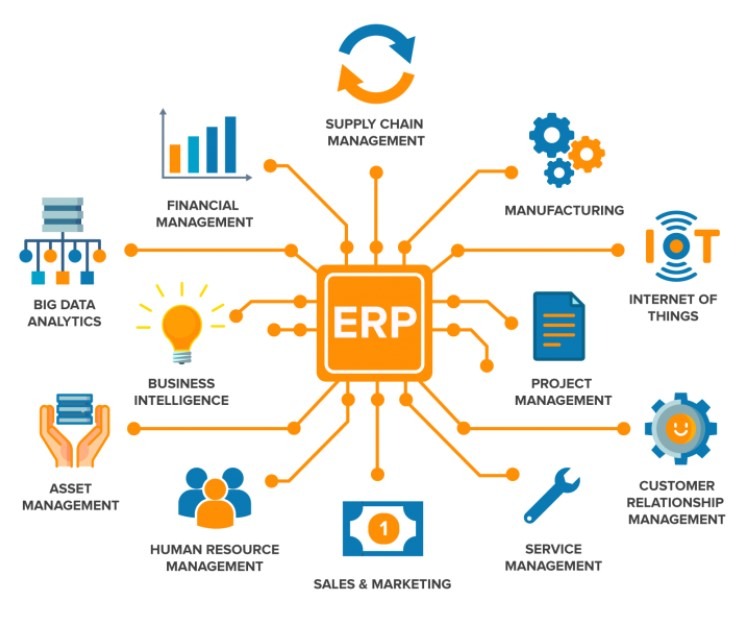

Basic ERP modules
Financial Management: The financial module, which is the basis of every ERP system, manages the general ledger and all financial data. It tracks every transaction, including accounts payable (AP) and receivable (AR), and handles financial reconciliations and reporting.
Human Resource Management (HRM): The module can maintain employee records with detailed information such as available PTO and performance reviews, and can check staffing trends across departments or demographic groups.
Supply chain management: Enables companies to oversee the flow of goods from suppliers through production and into the hands of customers. Keep production running smoothly by ensuring all materials are available and in the correct locations, and carefully plan machinery and labor resources.
Customer Relationship Management (CRM): This is a popular module for companies from various industries. It tracks all customer communications, helps manage leads, and can improve customer service and increase sales.
Manufacturing: Can be complex, and this module helps companies coordinate all stages of product manufacturing. The module can ensure that production meets demand and monitor the number of in-process and finished items.
Inventory Management: The module shows current inventory levels down to the SKU level and updates these numbers in real time. It also measures key inventory-related metrics. Every product manufacturing company needs this module to optimize available inventory based on current and forecast demand.
Project management: Service companies often use or project management module to plan and track projects, including the time and resources spent on them. It can simplify customer billing and encourage collaboration between employees working on a project.
E-commerce: The module enables retailers and brands to manage the back-end and front-end of their online stores. With this app, they can change the look and feel of their website and add and update product pages.
Marketing Automation: This module manages marketing activities across all digital channels – email, web and social media – and enables organizations to optimize and personalize their messages. The tool can increase leads, sales and customer loyalty.
Purchasing: The module manages the purchase of raw materials or finished products. It can automate quote and order requests and minimize over- and under-purchases when combined with demand planning.
Order Management: This application monitors and prioritizes customer orders from all channels as they are received and tracks their progress until delivery. The module can speed up processing and delivery times and improve the quality of customer service.
Warehouse Management: The module manages activities such as receiving, picking, packing and shipping. It can save time and costs in the warehouse by identifying more efficient ways to accomplish these tasks.
Work Order Management: This tool can record work orders, absenteeism and productivity by departments, teams and individual employees.
Implementation of the ERP system
The implementation of an Enterprise Resource Planning (ERP) system can be a complex and challenging process, and several factors can contribute to poor implementation. Here are some common causes:
1. Inadequate Planning: Lack of thorough planning is a significant cause of poor ERP implementation. Proper planning includes defining clear objectives, timelines, and resource allocation.
2. Insufficient Resources: Inadequate allocation of human, financial, and technological resources can hinder ERP implementation. Organizations may underestimate the amount of time, money, and skilled personnel required for a successful implementation.
3. Lack of Executive Support: Without strong support from top management, including commitment and involvement, an ERP implementation is likely to face resistance and obstacles. Executives need to champion the project and emphasize its strategic importance.
4. Resistance to Change: Employees may resist changes in their work processes, job roles, and the introduction of new technologies. Resistance can lead to a lack of cooperation and engagement, undermining the success of the ERP implementation.
5. Inadequate Training: Users need proper training to understand the new system and adapt to changes. Inadequate training can result in errors, inefficiencies, and frustration among employees.
6. Poor Data Quality and Migration: ERP systems rely heavily on accurate and clean data. Poor data quality or inadequate data migration strategies can lead to errors, inconsistencies, and disruptions in business processes.
7. Scope Creep: Expanding the scope of the ERP implementation beyond the initially defined boundaries can lead to increased complexity, delays, and budget overruns.
8. Ineffective Communication: Communication breakdowns between different stakeholders, departments, or project teams can result in misunderstandings and misalignments, impacting the smooth progress of the ERP implementation.
9. Inadequate Vendor Selection: Choosing the wrong ERP vendor or solution that doesn’t align with the organization’s needs can lead to problems during implementation. Due diligence in selecting a suitable vendor is crucial.
10. Inadequate Testing: Thorough testing of the ERP system before full implementation is crucial to identify and rectify issues. Inadequate testing can result in operational disruptions and failures.
11. Unclear Business Processes: If the organization’s business processes are not clearly defined or if they are overly complex, it can complicate the customization and configuration of the ERP system.
12. Lack of Post-Implementation Support: Post-implementation support is essential for addressing issues, refining processes, and ensuring ongoing success. Neglecting this phase can lead to long-term problems.
A hasty purchase of software may not only expose the company to costs related to the purchase and service of software, but also negatively affect the efficiency of processes and affect the company’s financial result.