DISTRIBUTION PROCESSES


The distribution process includes a number of activities related to the delivery of products from the manufacturer to the end customer. Below is a general description of the distribution processes:
1. 1. Inventory Management: A process that begins with proper inventory management. To replenish the number of products in the warehouse, forecast demand, and plan deliveries.
2. 2. Order picking (order fulfillment): The process involves delivering the products to the warehouse to a designated picking place according to the packing list,
3. 3. Packaging: The products are packed in a way that allows safe transportation. Pre-occurrence placement, marking and labeling information.
4. Transportation: This stage includes the elements of moving products from the point of origin to the destination. It may include various means of transport, such as trucks, trains, ships, planes, as well as modern delivery technologies such as drones and delivery robots.
5. Logistics: Logistics includes the management of the transportation, storage, and control aspects of products. This also applies to route optimization, delivery and access to system issues.
6. Order Processing and Customer Service: During delivery, it is important to maintain communication with users. Includes order status notification and problem notification.
7. Return Management: is an aspect of business operations, especially in the retail and e-commerce industries. Effective returns management can bring closure to the bottom line, build brand trust and minimize financial losses
8. Information management: There are IT systems, such as supply chain management (SCM) software and warehouse management systems (WMS), controlled for distribution monitoring and optimization.

Kanban
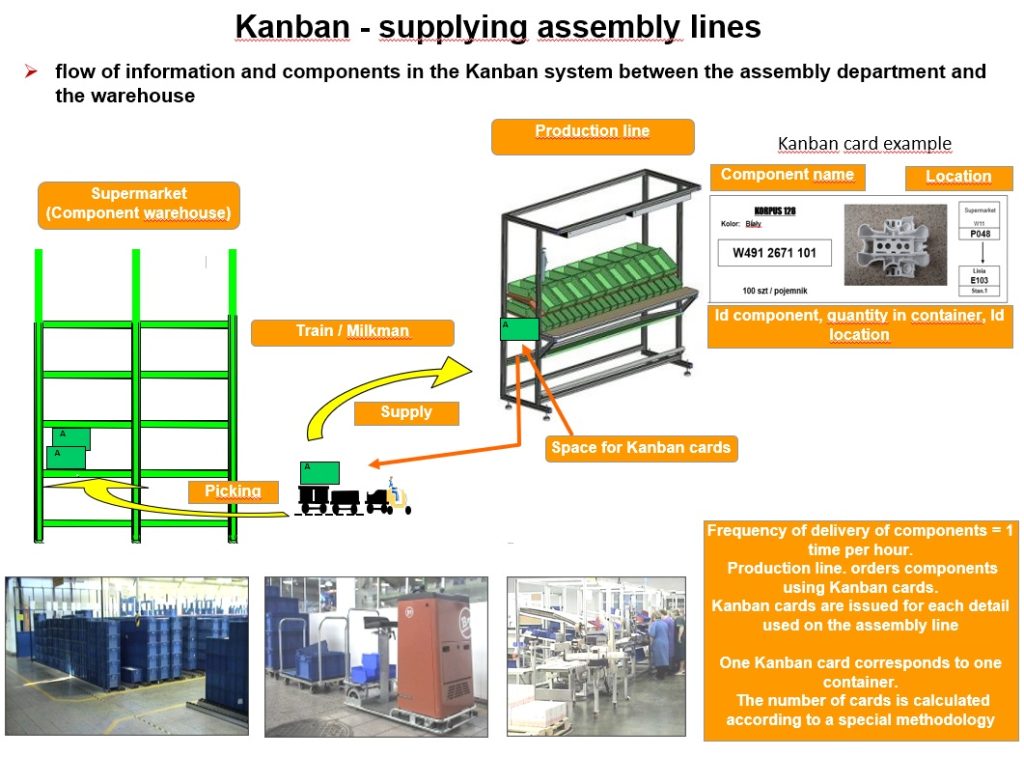
The Kanban card serves as a production order for delivering components to production stations and as a document describing the contents of the containers. Its main task is to provide information about the need for material flow during production. The word Kanban comes from Japanese and means a piece of paper. Loosely translated, it means “visible description”.
The goals of the Kanban system can be represented by the slogan “7 x none”:
1. No shortages
2. No delays
3. No inventory
4. No lines – anywhere and for anything
5. No idleness
6. No unnecessary technological and control operations
7. No displacements